
Cliff Jumping
Safety and respect for the environment.
Cliff Jumping: Safety & Respect for the Environment
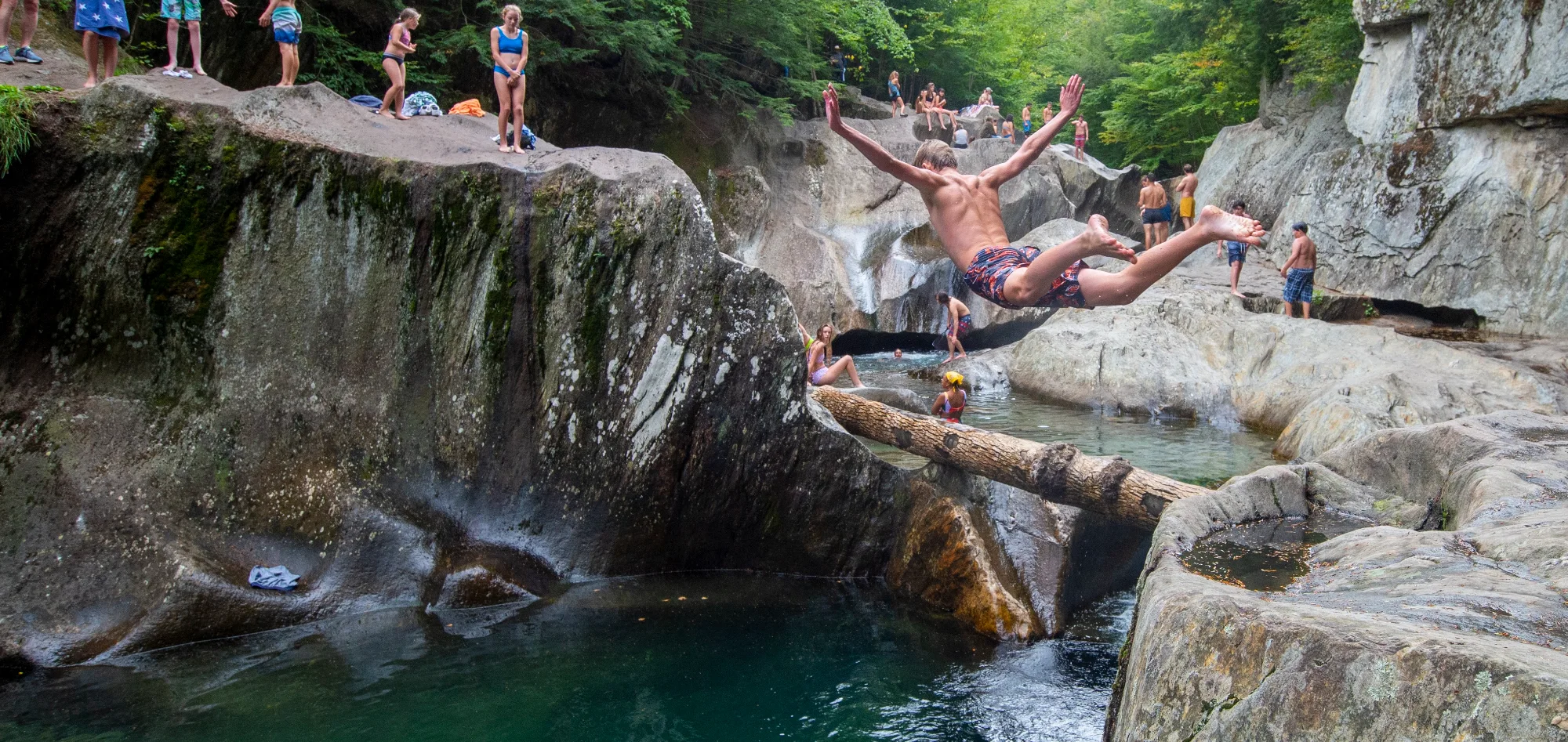
Cliff jumping in Vermont can be thrilling, but it comes with real risks and real responsibility. Following a few key principles helps protect both people and the natural places we love.
Safety First
- Choose a safe location: Only jump at spots known to be safe. Check with locals or experienced jumpers and always consider posted warning signs.
- Check water depth and hazards: Confirm the water is deep enough and free of submerged rocks, logs, or debris. Swim the landing area or check carefully before jumping.
- Jump feet-first: Entering feet-first reduces the risk of head, neck, and spinal injuries. Avoid head-first dives.
- Know your limits: Be honest about your swimming ability, comfort with heights, and physical readiness. Never let peer pressure push you into a jump.
- Don't jump alone: Always have a buddy or group present so someone can help or call for assistance if needed.
- Wear appropriate footwear and gear: Shoes with good traction can prevent slipping on wet rock.
- Plan for emergencies: Have a basic first-aid plan and know how to reach emergency services.
- Mind the water levels: As water levels change, so do the characteristics of the pools and the strength of the current. Understanding and appreciating the stream dynamics is important for safe cliff jumping.

Respect the Environment & Others
- Leave no trace: Pack out all trash, including bottles, wrappers, and food scraps. Avoid bringing any glass near natural water.
- Protect water quality: Avoid entering the water right after applying sunscreen, bug spray, or lotions. Never use soap or cleaning products in natural water.
- Respect wildlife and habitat: Stay on durable surfaces and avoid disturbing plants, animals, or sensitive shoreline areas.
- Share responsibly: Popular jump sites can be crowded. Take turns, be patient, keep noise reasonable, and follow local rules or closures.